
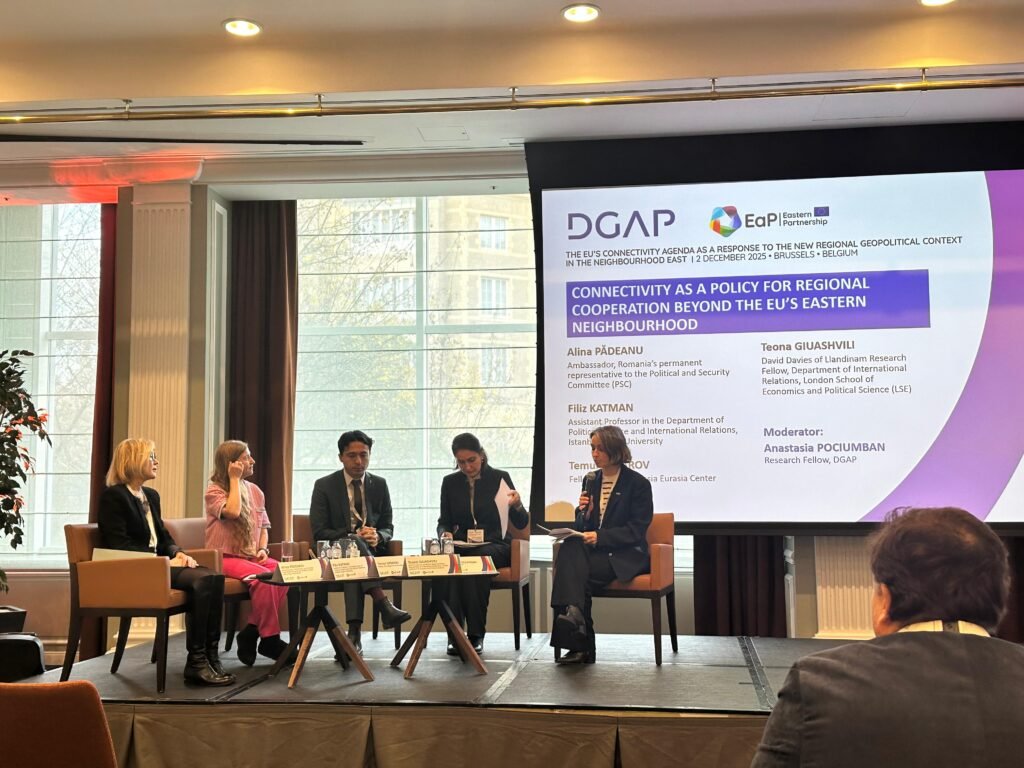
As confirmed by the event’s official programme published by DGAP, the conference brought together senior officials and experts from EU institutions, including DG ENEST, the European External Action Service, the European Bank for Reconstruction and Development, and regional policy institutes. Diana Jablonska, Head of Unit for Regional Strategy & Investment at DG ENEST, was among the featured speakers, providing institutional context for the broader discussion on EU connectivity policies in the Eastern Neighbourhood. The event examined how the European Union can adapt its connectivity approach amid significant geopolitical shifts in its eastern neighbourhood, with discussions covering the Russia–Ukraine war, evolving dynamics in the Black Sea region, intensified geopolitical competition in the South Caucasus, and growing interest from external actors such as China, India, and Türkiye.
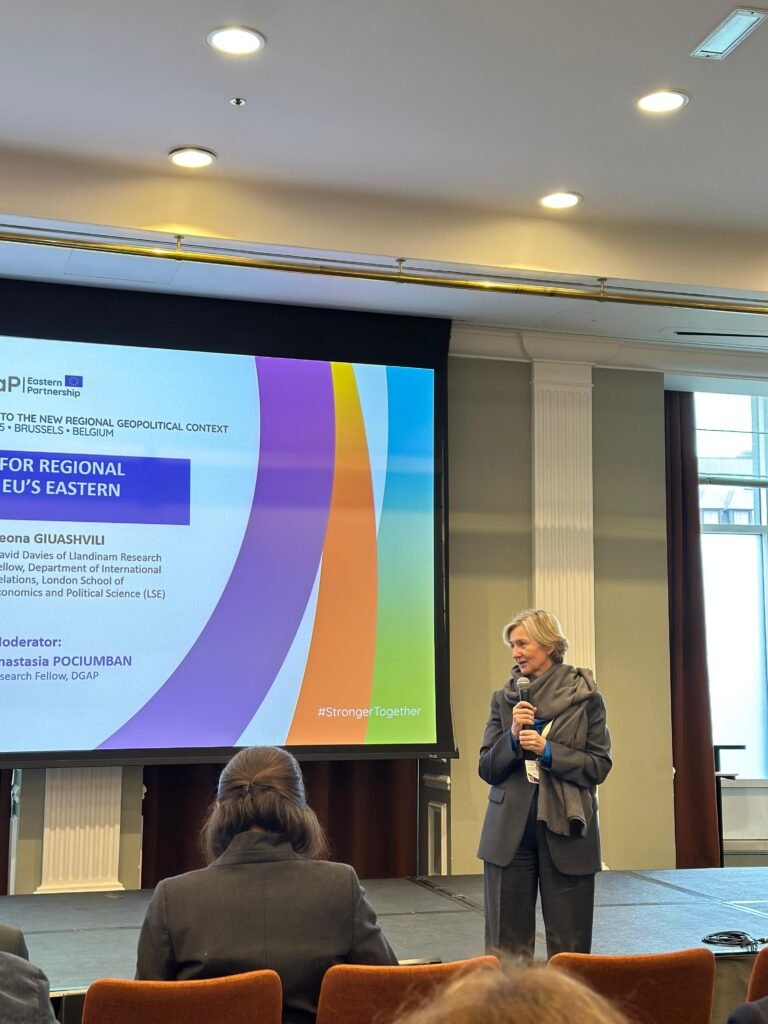
Participants reflected on opportunities and challenges across the wider region, including the importance of secure and reliable infrastructure in the Black Sea, the changing strategic environment in the South Caucasus, and developments affecting transit links between Europe and Asia. Attention was given to ongoing and emerging initiatives in areas such as regional energy cooperation, digital connectivity, and cross-border transport corridors. The role of local actors — including Armenia, Azerbaijan, Georgia, and the countries of Central Asia — was noted as increasingly influential in shaping regional preferences and partnerships.
Discussions also touched on the evolving expectations toward the EU, including differing levels of trust, the need for pragmatic engagement, and the balance between economic objectives and political considerations in EU policymaking. Participants examined how the EU can strengthen its presence and credibility while navigating a complex and competitive geopolitical landscape.
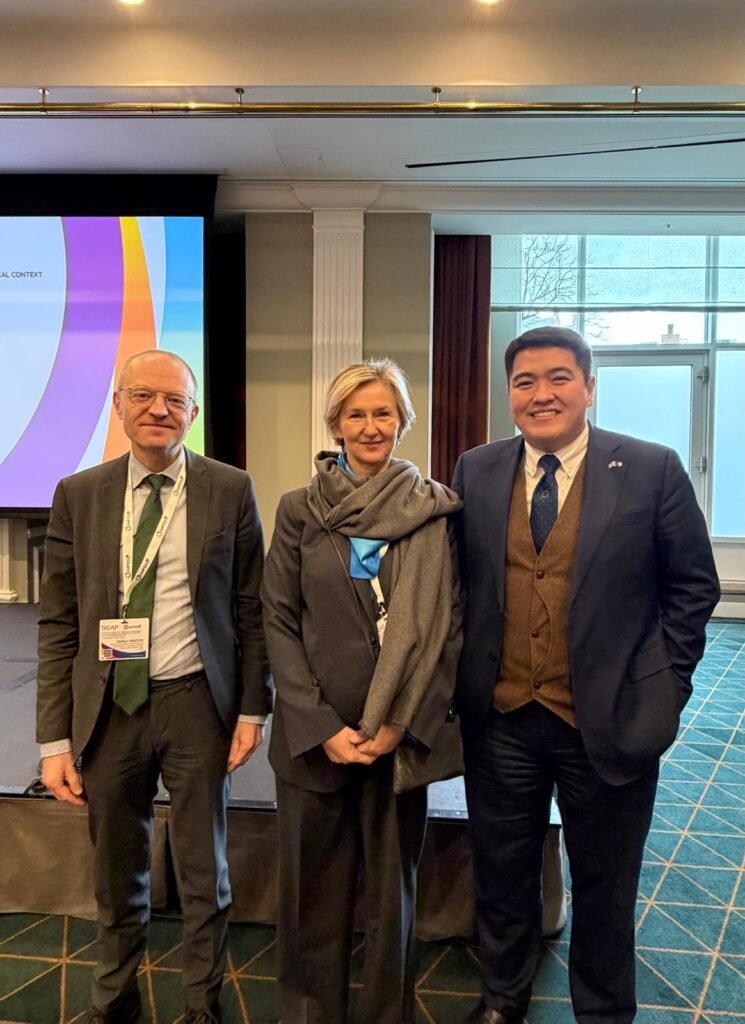
During the visit, the President of Kazakhstan-EU Gateway met with Diana Jablonska, Head of Unit, DG ENEST C1 (Regional Strategies & Investments), to discuss ongoing and future cooperation formats within the framework of regional connectivity, investment planning, and EU–Central Asia engagement priorities.
Furthermore, the President of Kazakhstan-EU Gateway discussed a new cooperation project with several regional experts and institutional representatives present at the event. These discussions focused on opportunities for joint research, analytical collaboration, and policy-oriented initiatives supporting EU–Central Asia and South Caucasus connectivity. The experts included:
- Zaza Namoradze — Geographic Lead, Central Asia — Open Society Foundations
- Jasur Mammadov — Chairman — Caspian Defense Studies Institute (CDSI)
- PD Dr. habil. Irina Morozova — Chair for East and South-East European History — University of Regensburg
- Armen Grigoryan — President — Centre for Policy Studies (CPS), Armenia
- Dr. Stefan Meister — Head, Center for Order and Governance in Eastern Europe, Russia, and Central Asia — DGAP (German Council on Foreign Relations)
- Temur Umarov — Fellow — Carnegie Russia Eurasia Center, Carnegie Endowment for International Peace
- Dr. Gülsən Paşayeva — Member of the Parliament of Azerbaijan (Milli Majlis) representing Second Khazar Constituency No. 13; Member of the Board — Center of Analysis of International Relations (AIR Center)
- Anahide Pilibossian — Vice President, Strategy and Development — APRI (Applied Policy Research Institute), Armenia
- Dr. Teona Giuashvili — David Davies of Llandinam Research Fellow, Department of International Relations — London School of Economics and Political Science (LSE)
The event underscored the growing relevance of connectivity as a strategic element of the EU’s external action. It highlighted the importance of enhancing coordination within the EU, supporting resilient and sustainable infrastructure, and engaging constructively with regional partners to address shared challenges in a rapidly changing environment.